Bride of the Ocmulgee: A Macon Georgia Legend
Uncover a tale whispered through the Georgia pines. 'Bride of the Ocmulgee' is a spooky, fun southern gothic fantasy short story that blends Macon's rich history with the mystical. If you love southern lore and enchanting narratives, settle in for a legend like no other.
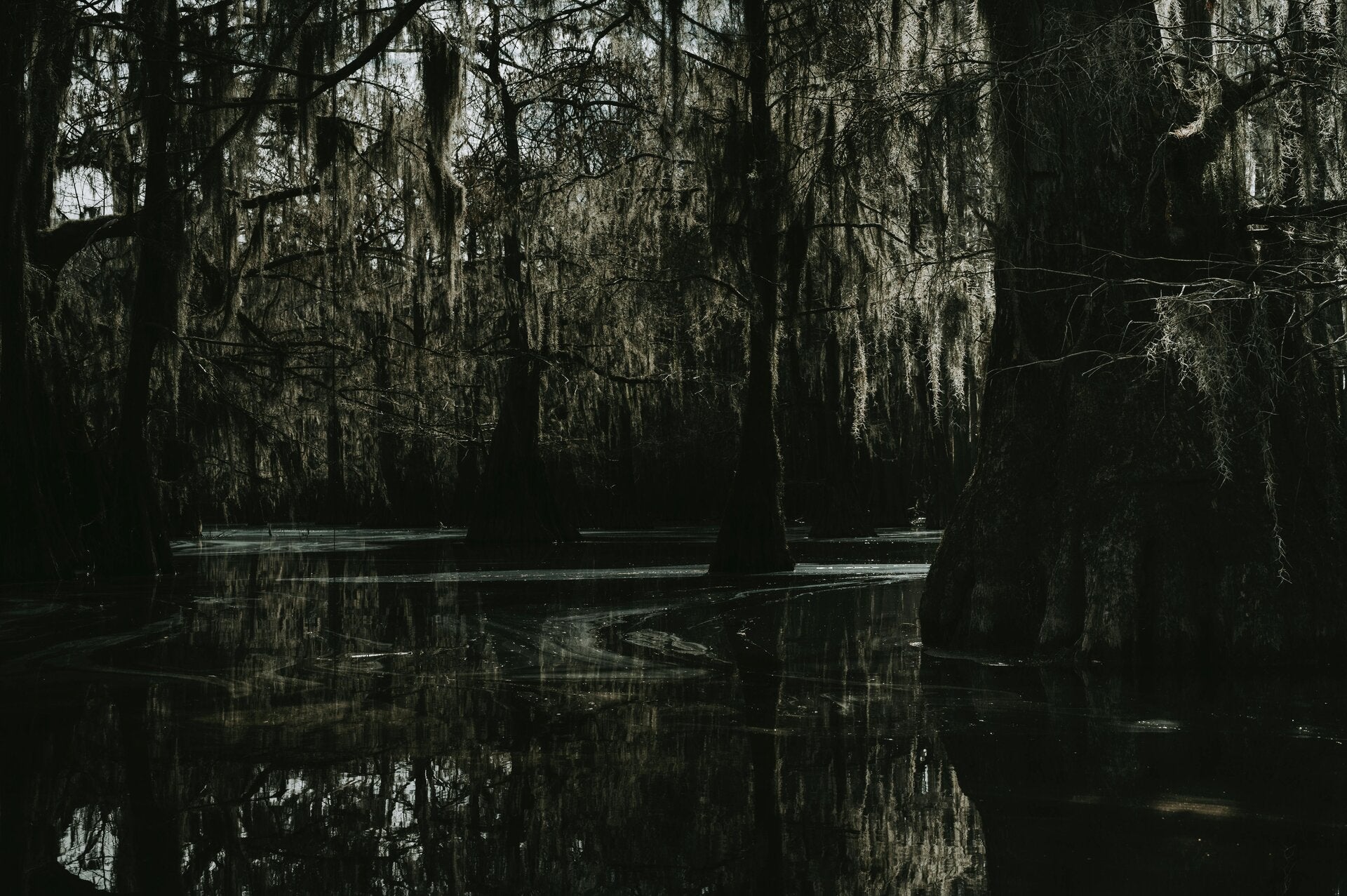
Where the Ocmulgee whispers secrets
The Ocmulgee River, ancient and meandering, holds secrets deeper than its muddy banks in the heart of Macon, Georgia. Locals often speak of a chill that lingers near its bend after dusk, a feeling not quite of the evening air, but of something far older. They speak of Evelyn March, a beauty from a bygone era, whose love story, tragic and entwined with the river itself, is a fascinating tale of Macon’s ghostly legends. For those who cherish southern history and tales of the ethereal, Evelyn's story is a somber yet thrilling delight.
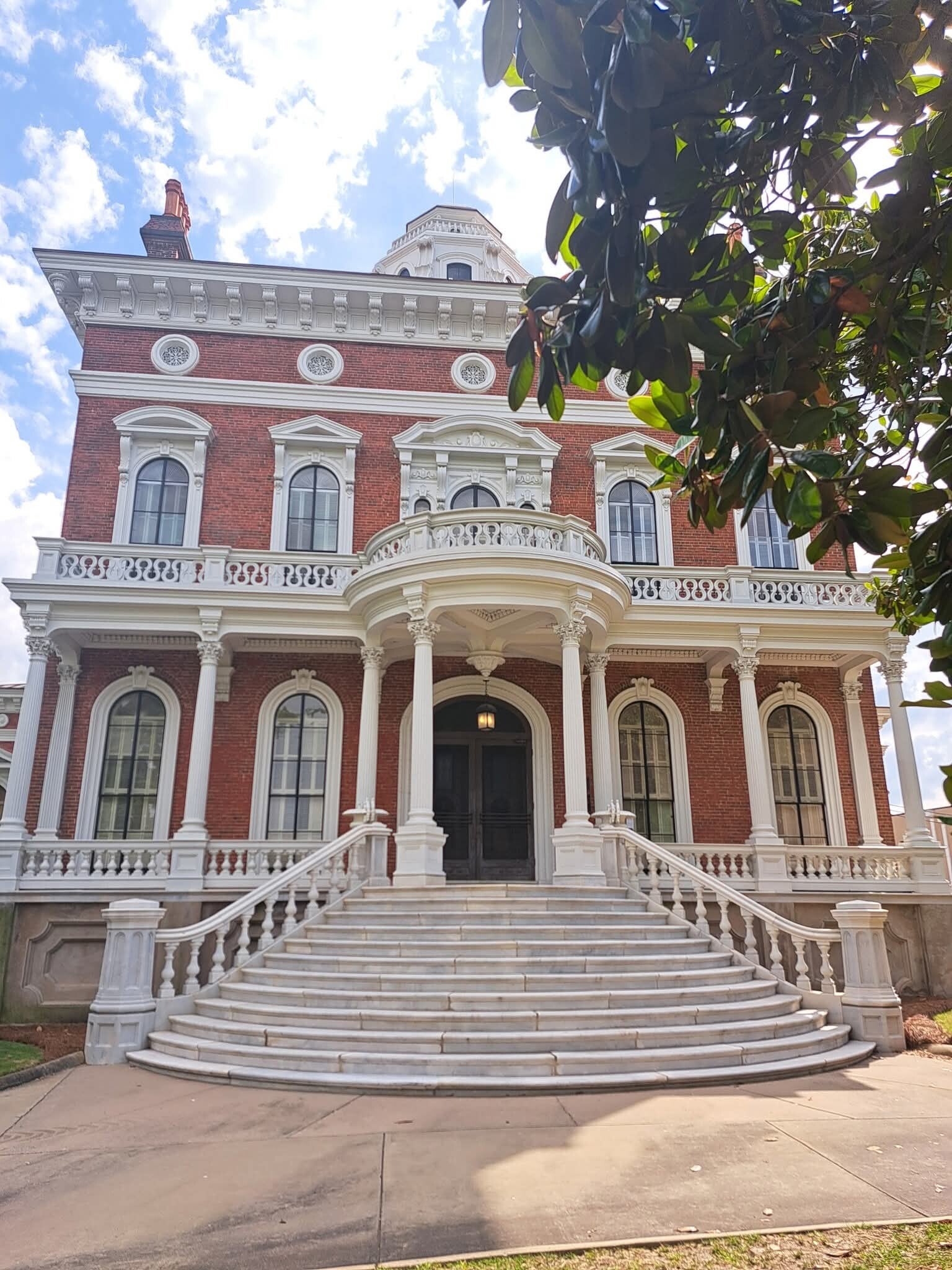
A love lost to the river's embrace
Evelyn, with her eyes the color of a summer storm and hair like spun moonlight, falls in love with and marries a young man named Thomas Ellison. Their love was the envy of Macon, a vibrant flame that promised to light up their lives. But the Ocmulgee, in its serene beauty, holds a jealous heart, and summons those bound to the land to pay their debts.

The spectral bride and her eternal vigil
They say Evelyn never truly left the Ocmulgee. Her spirit, forever yearning for her lost love, is seen on moonlit nights, a spectral bride in a flowing gown, gliding over the water's surface. Some claim she seeks to warn young lovers of the river's fickle nature, while others whisper she still searches for Thomas and Macon’s gold, her mournful cries echoing through the cypress trees. 'Bride of the Ocmulgee' is a testament to eternal love and the haunting beauty of a land steeped in history and mystery, offering a spooky yet fun dive into southern gothic fantasy. It is my hope you enjoy this tale from Saunterin' with Shane Bryant.
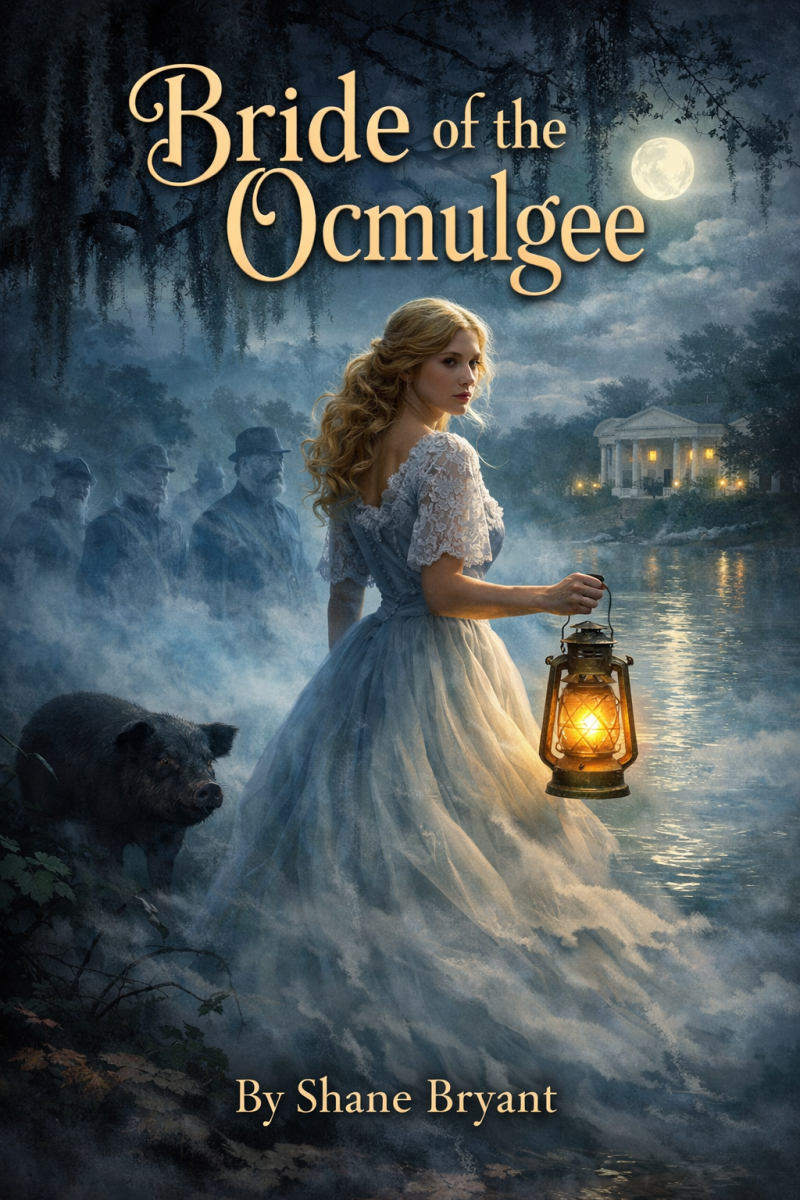
Bride of the Ocmulgee
A Macon Georgia Legend
Chapter I
The Gold That Never Left
By the spring of 1865, the Confederate treasury was slipping southward, moving in guarded wagons under the cloak of night. Some said it was destined for Savannah, others whispered it was headed to the Gulf, to be shipped abroad and kept from Union hands. Yet, when the convoy passed through Macon, Georgia, it was as if the earth itself swallowed the treasure whole.
The story of the missing Confederate gold has haunted Macon ever since.
Old families whispered that the gold wagons never left the city—that the Creek curse saw to that. Long before the first Greek Revival mansion rose along College Street, the Creek elders had warned the settlers: “Drink the waters of this land, and you will never leave. Your blood, your secrets, and your gold will be bound here forever.”
By the time the Confederates tried to move their treasure, those waters had already worked their spell.
There was one woman in particular, a witch by reputation, though her real name was Margaret O’Dell. Some said she was of Creek descent, others swore she was Irish, carried over on a coffin ship and raised among the red clay and kudzu. She lived on the edge of the Ocmulgee, in a shack the Union soldiers never dared torch. (Maybe she was the real reason Sherman didn't burn Macon or want to cross the Ocmulgee River on his way to Savannah...) It was said she watched the Confederate wagons roll in that night, her black cat perched on the porch rail, and whispered incantations that the gold would never leave Macon.
And so it was.
The soldiers guarding the treasure vanished—except one. Local legend says a private named Elijah Pike broke rank, tried to steal his share, and was cursed for it. Children still talk of the Talking Pig of Ocmulgee, a fat, bristled creature said to wander the alleys at night, grumbling in a human voice about “duty” and “gold.” Old men at the taverns swore Elijah’s soul was trapped in that animal, doomed to guard the gold until the end of days.
Then there were the caves. Macon’s underground—its forgotten basements, tunnels, and the caverned heart of the Ocmulgee mounds themselves. Whole passages lay hidden beneath storefronts and churches. Some of the treasure was said to have been bricked up behind false walls, mixed with mortar, and turned into the very bones of Macon. Others believed Margaret O’Dell guided the soldiers into the caverns below the city, where their lamps went out, and their voices faded, and the treasure was sealed in darkness forever.
Strange, though, how quickly Macon rose from ruin. While other Southern cities languished, Macon’s businessmen opened banks, built theaters, and raised steepled churches that caught the light like polished crowns. Families with no known fortune seemed suddenly flush with capital. The grand houses along High Street and College Hill blossomed like white columns from red soil. Greek Revival facades, marble steps, stained glass windows—all sprang up within a generation, as if gold had fertilized the ground.
But those families never spoke of wagons or witches, pigs or caverns. They simply smiled and carried on, their secrets kept in parlors and pews.
Not long after the gold went missing, Margaret O’Dell was never seen again. Strangely, around about this time a beautiful young woman comes to town, when I say beautiful, not just a little, but bewitching beauty. The men were all drawn to her. She spoke with a hint of a posh British accent, mixed with the Virginia "tide water" accent. Her voice was soft, but spell binding. No one ever knew for sure where she came from exactly. She would marry a local merchant, later they came into extreme wealth.
To this day, the treasure is said to sleep beneath Macon’s streets—bound by Creek curse, guarded by a pig that once was a man, sealed in tunnels no map dares show. Tourists drink the water, buy their postcards, and leave. But those born of Macon’s soil never truly escape.
Because in Macon, the gold never left—and neither, some say, do the souls who sought it.
Truth or fiction?
You decide...
Chapter II
Bride of the Ocmulgee
If you walk down by the Ocmulgee just before sunrise, when the mist clings low and the cicadas hush for breath, you might still hear her voice. Soft, like silk sliding over water. Some say she’s humming a hymn. Others say she’s remembering a love that never died.
Either way, friend, that voice belongs to Margaret O’Dell—or what’s left of her.
Now, Margaret’s tale don’t live in no history book, but the old folks of Macon still speak her name in a half-whisper, like a prayer and a warning both. She was a strange one, part Creek, part Irish, all mystery. Folks said the river knew her face as well as it knew the moon’s. When the Confederate wagons rolled in with their gold, Margaret stood on her porch at the edge of the Ocmulgee, her black cat purring like a saw, and she spoke words the wind ain’t forgotten.
That night, the gold went missing. The soldiers guarding it went missing too.
Now, by dawn, Margaret was gone, she used the gold to appease the Creek Native spirits and broke free from her curse. Beauty and fortune was in her future now.
When the first magnolias bloomed that spring, a new woman arrived in town—young, elegant, and as dazzling as morning sunlight on the river’s skin. She called herself Miss Evelyn March, and nobody questioned it. She had a touch of something foreign in her voice—a mix of Savannah charm and echoes of a faraway place, proper sort of lilt. Evelyn was given a voice to sing, it was as if the spirits had given magic to her voice, it was spell binding, her voice was bewitching. She rented a room near Mulberry Street, where the shopkeepers swore her very presence made business better. The widows envied her grace, and the men… well, let’s just say Macon’s bachelors took to wearing their best hats more often.
Among them was Thomas Beauregard Ellison, a true Southern gentleman if there ever was one. Heir to cotton on his mama’s side, banker’s son on his daddy’s, and the kind of man who believed that a polished boot and a kind word could solve most troubles. His father, Deacon Horace Ellison, was one of the town’s proud pillars—served the Lord on Sunday at Mulberry Methodist Episcopal Church, and the bank on Monday, both with equal devotion.
Thomas met Miss March at a church social, of all places. The story goes she was arranging flowers for the altar—white roses and lilies, hands moving so soft it made petals tremble. When she sang a verse of Come Thou Fount, the blooms opened wider, as if reaching toward her. Thomas, poor boy, never had a chance. Within weeks, all Macon was whispering. By candlelight they courted—her laughter spilling like honey, his devotion as sure as the sunrise over College Hill.
Now, there’s something in the air down here in Macon, something the Yankees never understood. It ain’t just the humidity—it’s the magic that seeps from the soil, the whispers that curl up from the river. Whatever Margaret O’Dell had done that night with the gold, she had tied herself to that power, and when she reappeared as Miss March, it came with her.
But this time… the magic had a heart.
Chapter III—
The Courtship and the Caves
Now, it wasn’t long before Thomas Ellison’s heart was plumb lost.
Folks said he started showing up at the florist three times a week, claiming his mother had “developed a fondness for fresh blooms.” Truth was, he just wanted to see Miss March arranging them, her hands gloved in lace, her perfume soft as garden rain.
They’d stroll the streets together in the cool of evening, when the gas lamps flickered like lightning bugs. She’d talk about poetry and faraway places, and he’d tell her of his plans—building new warehouses along the rail, opening another bank branch, giving Macon “a future bright enough to shame Atlanta.”
Sometimes, when they passed the church, she’d hum—low, haunting—and the steeple bell would tremble without a hand to pull it. Thomas never noticed, but old Deacon Horace did. He’d glance up from his hymnbook on Sundays, brows knitting whenever Miss March’s shadow crossed the sanctuary wall, just a heartbeat slower than her own step.
Still, love like that—well, it has a way of silencing suspicion.
By Christmas, they were engaged.
The wedding was the talk of the town. Roses from Savannah, music from Charleston, and enough lace on her gown to clothe a convent. Some said when she walked down the aisle, the candle flames leaned toward her as though in reverence. Others said they flickered away, afraid.
But let me tell you, friend—there was joy that day.
Pure, golden joy.
And in that joy, something changed. Margaret O’Dell—the old witch bound by Creek water and ancient curse—felt something she hadn’t known in centuries: peace. The curse was breaking, thread by thread, loosened not by power but by love.
In time, Evelyn grew truly to love Thomas—not as a spell, but as a soul. The curse had broken; she was free to leave Macon if she wished. But she stayed. Love had rooted her more deeply than any Creek water ever could.
When their first child was born, Katherine Grace, a girl with her mother’s eyes, the townsfolk said the baby had been “kissed by angels.” Evelyn knew better—it was the river spirits’ blessing, sealing her second chance at life.
Chapter IV
The Whispers Return:
You see, Macon ain’t kind to secrets.
Its soil remembers.
Its caves remember most of all.
Just beneath the Ellison home, near where the old tunnels of the war years still twisted underfoot, the voices of the walled-up soldiers began to stir. Masons working on the Ellison cellar claimed they heard faint knocking behind the bricks, like the echo of shovels on stone. One swore he heard a voice calling, “Miss O’Dell… we’re still waiting.”
And then came the pig.
Big old boar, scarred from snout to tail, eyes too human for comfort. Started showing up near the riverbank, rooting through the reeds and grumbling like a man who’d been cheated. Thomas spotted it first one night coming home from the bank.
“Evelyn,” he said, setting his hat on the rack, “there’s a hog down by the water talking plain English.”
“What did it say?” she asked, not looking up from her sewing.
“Said my name,” Thomas answered. “And yours. Said it was keeping watch.”
Evelyn smiled—tight, a little too still.
“Oh, Thomas,” she said softly, “the river’s full of echoes. It’s only your imagination, combined with your sipping too much of your uncle's whiskey."
He kissed her, and that was that. But the next morning, their gardener found the pig asleep beneath the magnolia tree, surrounded by fresh-turned earth and three gold coins gleaming where its hoof had dug.
The deacon ordered the spot sealed with brick.
The pig never came back.
But the whispers didn’t stop.
Chapter V
A Bit of Macon Humor:
Now, you know Southerners can’t let a good haunting ruin their appetite.
That spring, the Ellisons held the grandest picnic this side of the Ocmulgee—fried chicken, chess pies, mint juleps, and enough gossip to last till Pentecost. Somewhere between the blessing and dessert, old Mrs. Calloway swore she saw Evelyn whisper to a black cat perched on the lemonade table. The cat nodded, clear as day, and flicked its tail toward the preacher’s hat—right before a sudden gust sent the poor man’s wig tumbling straight into the punch bowl.
They laughed till tears rolled. Even Thomas joined in, his arm around his radiant bride. But later that night, when the house grew still, Evelyn sat by the window, her reflection shimmering strangely in the glass. Behind her, in the pane’s faint glow, she thought she saw the soldiers’ faces—pale, waiting, patient.
On another occasion, old Mrs. Calloway, their nosy neighbor, swore she once saw Evelyn talking to a black cat that answered back in a perfect Irish brogue. And Deacon Horace’s prized hogs went missing before Easter one year, only to be found the next morning asleep on the church steps, wearing garlands of wildflowers and smelling faintly of sulfur. The deacon blamed pranksters. The townsfolk winked.
Thomas never asked too many questions after that.
And down by the river, something—someone—was calling her name.
Chapter VI
The Bride and the Curse
They say love is the strongest spell a soul can cast.
But in Macon, even love must answer to the river.
The years rolled gentle as the Ocmulgee itself. The Ellison house grew finer, its columns gleaming white as doves in sunlight. Cotton flowed, the bank prospered, and no one dared whisper “witch” anymore. Evelyn—beautiful, kind, beloved—seemed every bit the model wife of a Southern gentleman.
But sometimes, when the fog hung low, Thomas would find her standing barefoot in the garden, eyes closed, murmuring to the mist. He’d call her name, and she’d turn slow, smiling faintly, as if returning from somewhere far away.
“Just listening,” she’d say.
“To what?”
“To the ones the world forgot.”
He’d draw her close, and the chill on her skin would fade—for a while.
The Night of Reckoning:
One night in late October, with thunder mumbling over the hills, Deacon Horace came to call. He’d grown uneasy—strange drafts in the cellar, candles snuffing themselves out in the church. He carried a Bible in one hand and a silver cross in the other.
“Thomas,” he said, “your wife—God forgive me—there’s a shadow on her. I’ve seen things I can’t unsee.”
Before Thomas could answer, the floorboards trembled. A sound rose from beneath the house—not wind, not thunder, but a heavy rhythm, like boots on hollow ground. Evelyn appeared at the top of the stairs, her face pale as moonmilk, her eyes bright and wet.
“You shouldn’t have sealed them in,” she whispered.
“What are you talking about?” Thomas cried.
“The soldiers,” she said. “They’re waiting for their freedom… and mine.”
A crack split the air. The cellar door flew open, and a gust of icy wind poured through, carrying voices—faint, echoing, sorrowful. The deacon fell to his knees, praying loud enough to shake the rafters.
Evelyn descended step by step, her gown trailing like mist, her voice rising to meet theirs.
“I bound you once,” she cried. “By love, I loose you now!”
The house shuddered. The lamps flared, then died.
When the light returned, Evelyn was gone. Only the faint scent of magnolia lingered.
They searched the grounds till dawn, but all they found were footprints in the dew—leading to the riverbank, then stopping at the water’s edge.
Thomas swore he heard her voice there, just before the sun rose:
“The gold can sleep… but love, love must walk.”
He never remarried. Every night till his dying day, he left a single candle burning in the window, facing the Ocmulgee.
Years later, when Thomas was buried in Rose Hill Cemetery, he had a grave and empty casket for Evelyn buried next to him, a headstone for both of them as if buried side by side.Folks noticed her grave never gathered moss, and her flowers never wilted. Some say her beauty still walks the Ocmulgee on quiet nights, a woman in blue whose reflection doesn’t quite match the moonlight.
And every now and then, a passerby will hear the faint grunt of a pig near the river, mumbling about lost gold and broken vows.
Macon keeps its secrets well—but if you look close, you’ll see them smiling from every marble step and magnolia bloom.
Because though the witch found her freedom, she never really left.
After all, in Macon… the gold never left either.
Chapter VII
The River Keeps Her:
Folks say that on misty mornings, when the church bells toll low and the river runs quiet, you can see a woman in blue gliding along the bank, her face turned toward town. Sometimes the scent of magnolia drifts ahead of her; sometimes a soft song carries over the water—part hymn, part lullaby.
Old fishermen claim she blesses the nets of those who speak her name kindly. Others swear if you mock her story, your catch will rot before sundown.
And once, years ago, a child said she saw a pig—muddy, grumbling, half-blind—trailing behind that spectral bride like a penitent servant.
“What did it say?” someone asked.
“Said he was keeping watch,” the girl answered. “Said the gold’s still safe.”
Now, I don’t know what you believe.
But I do know this: Macon’s got a shine to it after rain, like something buried beneath is still trying to rise. The banks prosper, the church bells ring, and the river keeps whispering her secret.
So if you ever find yourself walking by the Ocmulgee in the gray hour before dawn, and you feel the air thicken with perfume and sorrow—
Tip your hat. Speak soft.
Because that mist ain’t empty.
It’s her veil.
The Bride of the Ocmulgee still walks—
and the gold, like her love,
never left.
#maconga #macon #middlegeorgia #macongeorgia #Ocmulgee #ocmulgeeriver #Confederate #confederacy #civilwarhistory #Antebellum
Create Your Own Website With Webador