Midnight on the Ocmulgee: A tale from the deep south
Discover 'Midnight on the Ocmulgee', a captivating new story from Saunterin' with Shane Bryant. Journey back to 1944 Hawkinsville, Georgia, where a summer by the Ocmulgee River weaves a tale of first love, hidden secrets, and enduring courage. Get ready to be drawn into a world where faith and community are tested, and ordinary people rise to extraordinary occasions.
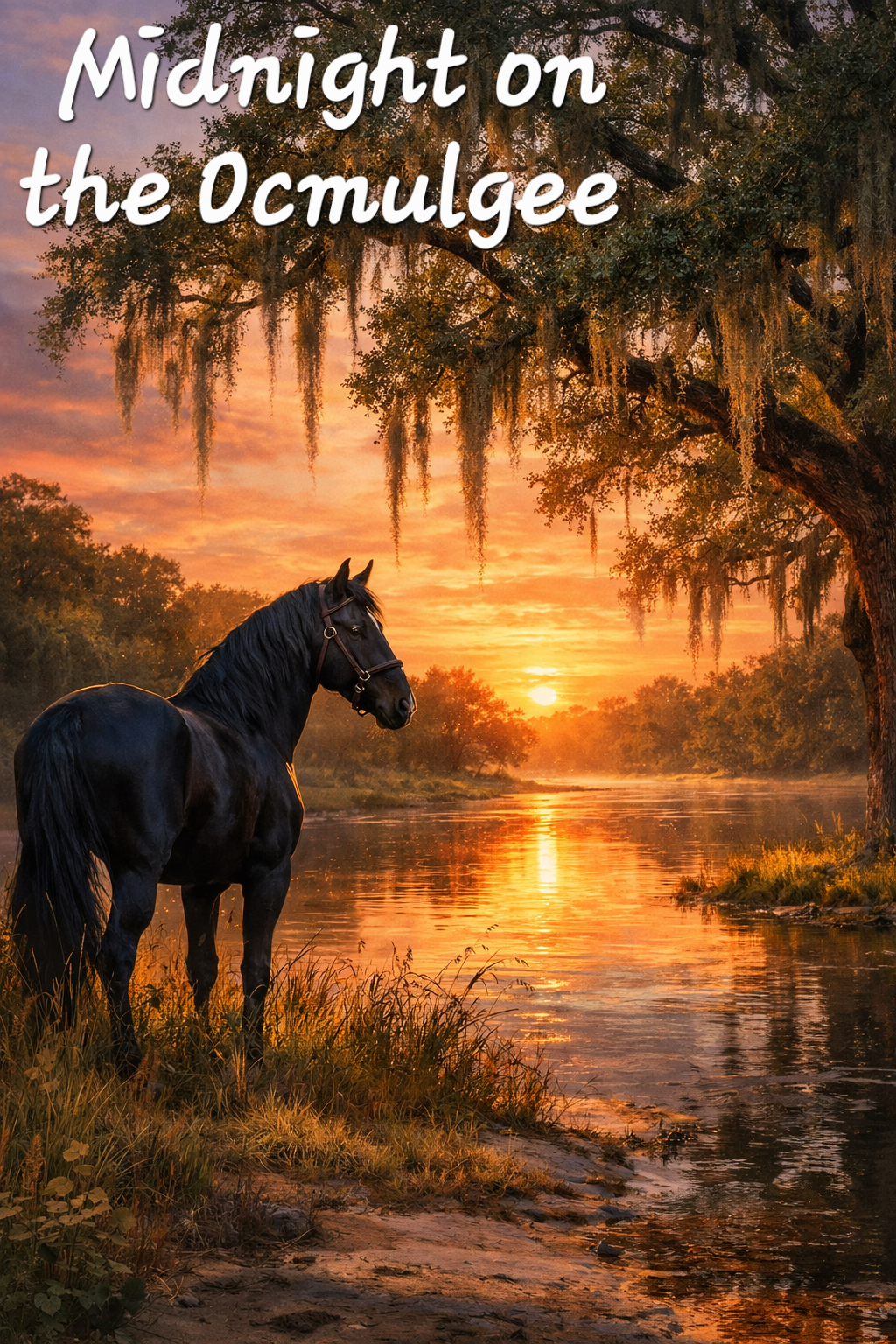
Journey to Hawkinsville, 1944
Set in the warm, vibrant heart of Hawkinsville, Georgia in 1944, this story brings to life a Southern river town at a crossroads of tradition, faith, and quiet courage. Along the banks of the Ocmulgee River — where cotton fields stretch wide and carriage horses thunder down dusty roads — a young man named Andy Walker comes of age during a summer that will change him forever.
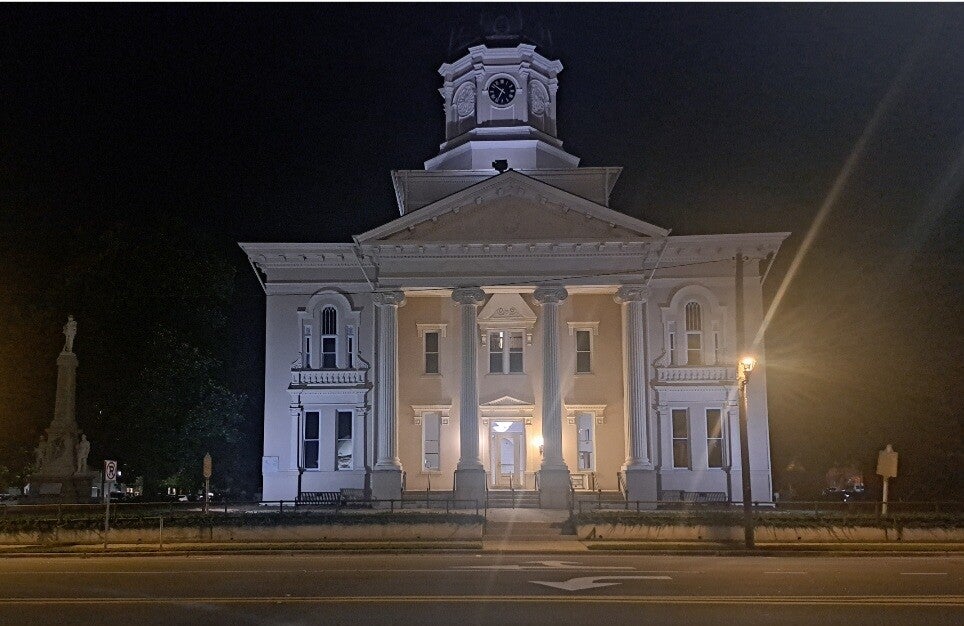
Where love and secrets intertwine
What begins as a simple church homecoming picnic unfolds into something far deeper: first love stirred under lantern light, old secrets whispered beneath live oaks, and a community tested when hate arrives at its doorstep. Guided by wise elders, a spirited aunt, a faithful preacher, and the unforgettable voice of a blind gospel singer, Andy learns what it means to stand, to love, and to belong.

The soul of the south
This story is about more than one boy or one town — it’s about the soul of the South: its beauty, its flaws, and the quiet bravery of ordinary people choosing what is right when it matters most. If you’ve ever loved small-town stories, rich Southern voices, or tales of faith, memory, and redemption, Hawkinsville will feel like coming home. Prepare to connect deeply, reflect on your own feelings, and remember what truly brings happiness.
The following is a teaser, chapter 2 from the book. It's a preview of what's to come, enjoy!
~ Shane Bryant
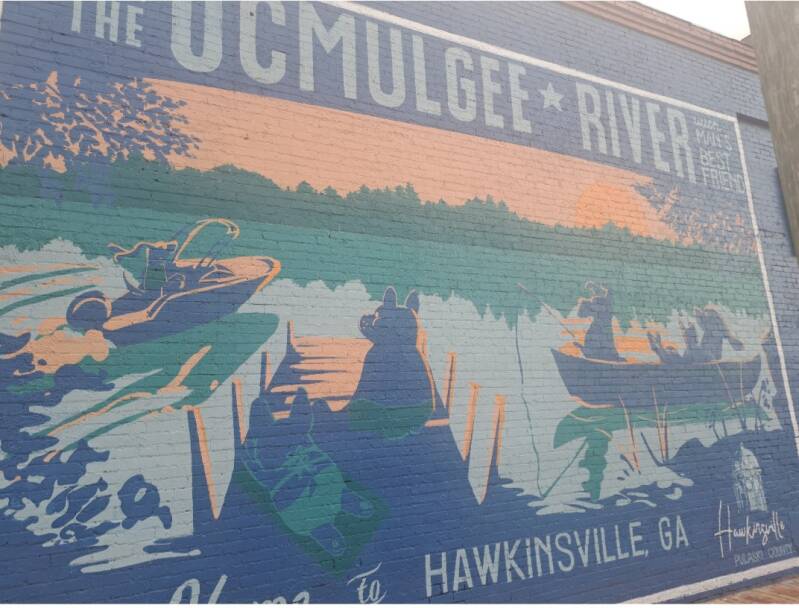
Chapter 2 — Homecoming Sunday
By 1944, Hawkinsville had found its rhythm again. The war still rumbled overseas, and telegram boys still made folks hold their breath, but life along the Ocmulgee kept moving steady as ever. Crops grew. Horses trained. Church bells rang on Sunday mornings. And in the center of it all stood Reverend Earl Oglethorpe — tall, composed, voice smooth as river water over stone.
He had not always carried that quiet steadiness. Two years earlier, in 1942, he had buried his wife, Belinda Mercer Oglethorpe — sister to Meredith “Annie” Calloway — after a sudden automobile accident outside Macon. Belinda had been light and laughter wrapped into one woman. She and Earl had met when he was still in college, a young preacher with more zeal than polish. She used to tease him that he preached like thunder but courted like a gentleman poet. They had loved each other deeply. And when she died, something in Earl went still. He did not rage. He did not shout at Heaven. He simply folded his grief inward, preaching every Sunday as faithfully as before, but with a softness in his voice that hadn’t been there prior. People said his sermons grew gentler after Belinda passed — more mercy, less fire. He had not remarried. Folks assumed he never would. But grief, like river water, changes shape over time.
About that same season, Granny Gracie Walker had taken it upon herself to ensure her sassy daughter, Miss Polly Walker, began attending Hawkinsville Baptist regularly instead of splitting her Sundays between Perry and wherever else her lively spirit carried her.
Granny Gracie was soft-spoken, but she missed nothing. Polly Walker had never married either. Not for lack of offers — Lord, no. Perry, Georgia had seen more than one hopeful suitor tip his hat and try his luck. But Polly had always wanted something that felt like both spark and steadiness, and most men offered only one or the other.
She ran a beauty parlor in Perry — modern by 1940s standards — curling irons heating on the stove, glass jars of cold cream lined neat on shelves, magazines from Atlanta fanned across little tables. She wore her hair stylish, her lipstick bold for a small-town woman, and she carried herself like she’d once seen the inside of a bigger world and refused to forget it.
Reverend Earl could hold his own with any lady. He had education. Wit. That deep preacher’s voice. And when he laughed — which he did more often around Polly — it sounded honest. The two of them never announced anything. They didn’t need to.
They walked out of church side by side more Sundays than not. They lingered near the live oak in the churchyard longer than propriety strictly required. Once or twice, someone swore they’d seen Earl offer Polly his arm when stepping down from the church steps. Whispers floated, but kindly. They were not courting exactly. But they were not not courting either. And as a pair, they worked like matched horses — steady and spirited all at once.
One late afternoon in early summer, the two of them sat beneath that very live oak tree after choir rehearsal, cicadas humming overhead. Earl watched Andy Walker from across the yard. The boy was taller now, shoulders beginning to broaden, but there was a hollowness about him — a distance in his eyes that had never fully left since his mother Mary drowned in the flood. “He’s goin’ through the motions,” Earl said quietly. Polly followed his gaze. “Yes sir, he is.” “Healthy as a young pine,” Earl continued. “Strong. Respectful. Works hard.” “But empty,” Polly finished softly. Earl nodded. “Like a cotton field left fallow for a season,” he said. “It’ll bear fruit again. Just not yet.” Polly sat with her hands in her lap, thinking. “We gotta help that boy,” she said finally.
Earl’s eyes twinkled. “Well now,” he said slowly, “I might know of a remedy.” Polly turned toward him. “Oh, do tell, Reverend.” "My niece Miriam Calloway is coming to town for the summer. Terry’s bringing the horses down to Hawkinsville stables. Says Savannah’s too crowded this season.” Polly raised one perfectly arched eyebrow. “Calloway’s girl?” she asked. “The very one.” “The one plays piano like an angel and argues like her mama?” “That would be her.” Polly smiled slowly.
Now Polly and Earl were known — gently known — for arranging small mercies in people’s lives. A seat assigned beside a suitable widower. A church committee pairing that blossomed into something more. Nothing scandalous. Just nudges.
But Andy Walker and Miriam Calloway? That would be something else entirely. Class lines ran firm in Hawkinsville. The Calloways had money — shipping warehouses in Savannah, a cotton mill up in Atlanta, horses worth more than some folks’ yearly wages. Andy was the grandson of a sharecropper, son of a sawmill man. Polly’s smile widened. “Well,” she said, “if we’re going to meddle, we might as well meddle magnificently.” Earl chuckled low. “It’ll be a challenge.” “Oh honey,” Polly replied, standing and smoothing her skirt, “a challenge is the only thing worth doin’.” Earl rose beside her. "And if it don’t work?” Polly slipped her arm through his, bold as brass for two people pretending discretion. “Then at least we’ll have had ourselves some fun tryin’.”
They began walking toward the church steps. Behind them, Andy stood alone near the fence, staring off toward the river like he was listening for something only he could hear. Polly glanced back once more. “Yes,” she murmured. “That boy needs light again.” Earl followed her gaze. “And maybe,” he said thoughtfully, “the Lord’s already sendin’ it.” Neither of them said the word love. But they were both thinking it.
And thus, before the Baptist picnic was ever planned, the stage had already been quietly set. Two seasoned hearts. One hollow boy. One bright girl. And a town that loved to watch a story unfold.
The church homecoming festival was the biggest social event of the summer, and everyone in Pulaski County knew it. Folks planned for it like they planned for Christmas. Dresses were pressed, shoes polished, hair curled and combed just right. The men cleaned their instruments, the women baked and fried and cooked like they were feeding an army, and the children spent all week counting down the days like it was their own personal holiday.
The old Baptist church sat just outside town, white-painted and proud, with tall windows that let sunlight pour in like a blessing. That Sunday afternoon, the church yard looked like something out of a postcard — picnic tables stretched across the grass, covered in checkered cloths and casseroles wrapped in foil. Red, white, and blue balloons bobbed in the breeze, tied to fence posts and tree branches, swaying like they were dancing to music only they could hear.
The smell of fried chicken filled the air — fried any way you could think to fry it — along with barbecue, fried green tomatoes, corn on the cob, watermelon from Cordele (sweetest in the world ), pecan pies, peach cobblers, banana puddings stacked high in glass bowls, lemonade so cold it made your teeth ache, and sweet tea poured so dark it looked like molasses in a glass.
The women wore their brightest summer dresses — yellows, blues, florals, polka dots — hats tilted just right, fans fluttering in the heat. The men gathered in small circles, laughing, slapping backs, trading stories, and tuning guitars, banjos, fiddles, and harmonicas. The children ran wild in the field behind the church, playing horseshoes, jumping rope, pitching quarters, chasing one another until their faces were flushed and their laughter rang out like bells.
And in the middle of it all stood Granny Gracie Walker, clipboard in hand, directing traffic like a general.
“Now Miss Laverne, that potato salad needs to go on the left table — yes ma’am, right next to Miss Hattie’s deviled eggs. Andy, sugar, go help Mr. Cleve carry that watermelon over there. And somebody find Rev. Oglethorpe, I need to know where he’s put them balloons!”
Andy moved through the crowd like he belonged there — because he did. Folks greeted him with smiles and pats on the shoulder.
“How’s your granddaddy, son?”
“You grown another inch since last Sunday.”
“Tell your grandma them biscuits nearly made me cry.”
He laughed and nodded, helped where he could, enjoying the warmth of the afternoon, the sound of voices layered over one another, the way the whole town seemed to breathe together.
That’s when he saw her.
She stood near the church steps, talking to Rev. Earl Oglethorpe — tall, silver-haired, kind-eyed, and always smiling like he knew something good was about to happen. Beside him was a girl Andy didn’t recognize at first, and then all at once, he did — or at least, he felt like he did.
She had the kind of blonde hair that caught the sunlight and held onto it, like it wasn’t ready to let go just yet. Her dress was pale blue, simple but perfect, and she stood with a quiet confidence, hands folded loosely in front of her, smiling at something Rev. Oglethorpe was saying. She couldn’t have been more than twelve, but there was something about her — something calm, something warm, something that made Andy feel like the world had just shifted a little off its center.
Granny Gracie noticed Andy had stopped moving.
“Boy,” she said softly, not looking at him, “if you stand there any longer, you’re liable to root into the ground.”
Andy flushed. “I was just— I mean—”
“I know exactly what you were doing,” she said, smiling to herself. “Now go on. Rev. Oglethorpe’s looking for you anyway.”
Andy took a breath and walked toward them, heart beating harder than it had any right to.
“Andy,” Rev. Oglethorpe said, turning as he approached. “Just the young man I wanted to see.”
“Yes sir?” Andy said, trying to stand straight, trying not to stare.
“This here is my niece, Miriam Calloway,” the Reverend said proudly. “She’s in town for the summer with her daddy. Came all the way from Savannah.”
Miriam smiled at him, and Andy felt something warm bloom in his chest.
“Hi,” she said.
“Hi,” Andy said back, suddenly very aware of his hands, his feet, his hair, and everything else about himself.
Just then, a familiar voice rang out behind him.
“Well, if it ain’t my little sugar britches!”
Before Andy could turn around, two hands pinched his cheeks — hard.
“Oh there he is! Look at you, nearly all grown up! I haven’t seen you in a whole year of Sundays!”
“Aunt Polly,” Andy groaned, face burning.
Miss Polly Walker — his daddy’s sister — stood grinning from ear to ear, her hair done up in a big curl of brown, her bright red lipstick shining in the sunlight, and her dress a bold shade of green that matched her personality perfectly. She pulled Andy into a hug, squeezing him tight.
“You’ve got taller, sugar britches,” she said. “And skinnier too. Lord, Gracie, are you feeding this boy?”
“Don’t start,” Granny Gracie called from across the yard. “You know good and well that boy eats better than most grown men in this town.”
Aunt Polly finally released Andy and turned to Miriam.
“Well now, who is this pretty young thing?” she asked, eyes sparkling.
“I’m Miriam,” she said, smiling, clearly amused.
“Well Miriam, you just met the most handsome boy in Pulaski County, and don’t you let anybody tell you different,” Aunt Polly said. “This here is Andy Walker — my nephew, my pride, and my biggest headache all rolled into one.”
Miriam giggled, and Andy wished he could disappear into the red Georgia dirt.
“Aunt Polly, please,” he muttered.
“Oh hush,” she said, patting his cheek. “If I don’t embarrass you, who will?”
Rev. Oglethorpe laughed. “Miss Polly, you haven’t changed a bit.”
“Thank the Lord for that,” she said. “Now if you’ll excuse me, I’ve got to go see if anyone’s touched my pound cake yet.”
She winked at Miriam and sashayed off, leaving Andy standing there, mortified and smiling all at once.
“I’m sorry about that,” Andy said.
“Don’t be,” Miriam said. “She’s wonderful.”
Andy looked at her, surprised. “You think so?”
“I know so,” she said. “Anyone who calls their nephew ‘sugar britches’ in front of half the town and still makes it funny — that’s a special kind of love.”
He laughed, feeling lighter than he had all day.
Just then, Rev. Oglethorpe raised his hand.
“Now folks, if you’ll gather ‘round, we’re about to have some special music this evening.”
The chatter softened, the children slowed, and people began drifting toward the front of the church yard.
“This evening,” Rev. Oglethorpe continued, “we are blessed to have with us a dear friend and servant of God — Rev. Pearly Brown from Abbeville, Georgia.”
A murmur moved through the crowd. People knew the name.
A tall, slender man stepped forward, guided gently by a young boy holding his arm. Rev. Pearly Brown wore a dark suit, neatly pressed, and dark glasses that hid eyes that had not seen the world in many years. But there was nothing hidden about his presence. He stood tall, head lifted, face calm and open, as though he could see more than most folks ever would.
He held a guitar, worn smooth by years of use.
When he began to sing, the world changed.
His voice rolled out slow and deep, rich with rhythm and soul, carrying the sound of the river itself. It wasn’t just singing — it was feeling. It was prayer. It was memory. It was pain and hope and joy braided together like the waters of the Ocmulgee winding through the land.
People stopped chewing.
Children stopped running.
Even the cicadas seemed to quiet down.
His voice moved through the crowd like a current, flowing around hearts, stirring things people didn’t always know how to name. It sounded like Sunday morning and Saturday night all at once — gospel and blues woven together, sorrow and celebration walking hand in hand.
Andy felt it in his chest, in his bones.
He glanced at Miriam, and she was listening too, eyes closed, head tilted slightly, like she was letting the sound settle deep inside her.
Now, Hawkinsville had its share of ignorant folks, sure — every town did — but it wasn’t the kind of place that let hate set the rules. Most folks here saw each other as family. Everybody belonged. And on that night, everybody belonged to Reverend Pearly Brown.
The lanterns glowed. Children sat cross-legged on quilts. Families leaned together on folding chairs. The smell of barbecue and sweet tea hung thick in the air. And up on the wooden stage, Reverend Pearly Brown’s voice rose strong and steady, carrying clear across the church yard.
“Help me, Lord, to understand…
Your will for me, Your guiding hand…”
Just as he lifted into the chorus, a murmur rippled through the crowd — not the good kind.
From the tree line beyond the church yard, shadows began to move.
Ebenezer Hudson had come over from Eastman.
He was a mean-looking man, ugly in the face and uglier in the soul, and known across Dodge County as the ringleader of those fools who paraded around in white sheets and pointed hoods, thinking hate made them powerful. He’d heard a colored man was singing at Hawkinsville’s Baptist homecoming picnic — and he didn’t like it one bit.
He didn’t come alone.
They crept out of the woods like something unclean, one of them holding a burning cross high above his head, the flames licking the dark sky. Others wore their sheets and hoods, hollering and cussing, shouting curses toward the stage.
“Y’all oughta be ashamed!” Ebenezer yelled. “Letting a colored man sing in your town!”
Gasps rippled through the crowd. Children clung to their mothers. Music faltered. Reverend Brown stopped mid-phrase, his hand still lifted, his face calm — but his eyes full of sorrow.
Reverend Earl Oglethorpe and Johnny Walker — Andy’s granddaddy — locked eyes across the yard.
“Run,” Oglethorpe said. “Fetch the sheriff.”
Johnny was already moving.
Pulaski County Sheriff Bubba Tripp had stepped away from the picnic a few minutes earlier, doing a quick patrol of town like he always did on big nights. Johnny found him near the square.
“Bubba,” Johnny said, breathless, “them idiots from up Eastman showed up — got them crazy sheets and pointy hats on, burning a cross.”
Bubba’s jaw tightened.
“I was afraid of it,” he said. “Mayor over in Eastman warned me Thursday to be on the lookout.”
He turned without another word and headed straight back toward the church yard, boots hitting hard against the dirt road.
When Bubba stepped into the lantern light, he took in the scene in one sweeping glance — the frightened families, the burning cross, the hoods, the shouting, and Reverend Brown standing still on the stage like a lighthouse in a storm.
Bubba’s face went red with fury.
“Hawkinsville is my town,” he growled, loud enough for everyone to hear, “and I’ll be damned if I let a pack of idiots from Dodge County come in here and ruin our music — whether it be colored or not — or our picnic.”
Ebenezer staggered forward, reeking of alcohol and ignorance, his voice slurred with hate.
“You ain’t got no right—” he started, spitting curses and slurs.
Bubba didn’t wait for the rest.
He reared back and punched Ebenezer square in the face.
The blow landed with a dull crack, and Ebenezer went down hard in the dirt, his hood tumbling off, his torch dropping to the ground where someone kicked it out.
“That’ll teach you,” Bubba said, pointing at the rest of them, “never to come messing around here in Hawkinsville.”
The crowd held its breath.
That’s when Reverend Oglethorpe stepped forward.
He reached inside his coat and pulled out his pistol, raised it, and fired one sharp shot into the air.
The sound cracked across the night like thunder.
“Get out of here,” he shouted. “And don’t come back.”
For a moment, no one moved.
Then one by one, the men in sheets began to scatter — stumbling, running, melting back into the woods from where they came. Someone dragged Ebenezer away, muttering and cursing, leaving nothing behind but churned dirt and the memory of shame.
Silence settled over the church yard.
A heavy, aching silence.
Reverend Pearly Brown stood quietly on the stage, his hands folded, his head bowed. Then he lifted his face, eyes shining not with anger — but with something stronger.
Grace.
He stepped back to the microphone.
“Friends,” he said softly, “I believe the Lord was just testin' us tonight. And I believe we passed.”
A ripple of murmured agreement moved through the crowd.
He took a breath and began again:
“Help me, Lord, to understand…
Your will for me, Your guiding hand…”
This time, his voice carried something deeper — not just music, but testimony.
Tears fell.
Hands lifted.
People stood.
That night was one Hawkinsville would remember — for good and for bad — hearts shaken, but warmed by the knowledge that when it mattered, the town had done the right thing.
And Reverend Pearly Brown preached… not with words, but with song.
When Rev. Brown finished, there wasn’t applause right away — just a long, holy silence. And then, slowly, the crowd erupted, clapping and cheering, some folks wiping their eyes, others smiling like they’d just remembered something beautiful.
“That,” Rev. Oglethorpe said softly, “is what heaven sounds like.”
Andy believed him.
As the evening wore on, the lanterns were lit, the balloons glowed softly in the dark, and laughter rose again into the warm Georgia night. Andy and Miriam found themselves walking side by side, talking quietly.
“Do you like Hawkinsville?” Andy asked.
“I do,” Miriam said. “It feels… kind.”
“It is,” he said. “Most days, anyway.”
“I think I could get used to it,” she said, smiling at him.
Andy felt something shift again — something deeper this time.
The lanterns were glowing soft now, casting warm halos across the church yard, and the crowd had begun to thin just a little — not leaving, just settling into that lazy part of the evening where folks leaned back in folding chairs, children dozed on quilts, and the air cooled enough to make the breeze feel like a blessing.
Rev. Earl Oglethorpe stood near the edge of the yard, hands folded behind his back, watching Andy and Miriam walk slowly along the fence line, their heads close together, voices low.
“Well,” he said quietly, “if that ain’t the sweetest thing I’ve seen all summer.”
A familiar voice answered behind him.
“I told you,” Aunt Polly Walker said, stepping up beside him. “All it takes is a good picnic, a little gospel music, and one pretty girl from Savannah.”
Rev. Oglethorpe chuckled. “And one good-hearted boy from Hawkinsville.” "Reminds me of how we got together few years back after my wife died, a picnic just like this, and your mama Gracie Walker just happen to intoduce us"
Polly crossed her arms, smiling wide. “That boy don’t even know he’s falling yet.”
“He knows,” Earl said. “He just doesn’t know what to call it.”
They stood there a moment, watching Andy say something that made Miriam laugh — not a polite laugh, but the kind that came from her chest, the kind you couldn’t fake if you tried.
Polly tilted her head. “Lord, look at her face. That girl’s already gone.”
Earl nodded slowly. “And so is he.”
They walked a few steps away from the crowd, stopping near the large live oak tree at the edge of the church yard — the one whose branches stretched wide and low, thick with leaves, offering shade by day and secrecy by night.
“Well,” Polly said, lowering her voice, “I’d say our little plan is working just fine.”
Earl raised an eyebrow. “You think so?”
“Think so?” Polly said. “Sugar, I know so. That boy’s been tripping over his own feet since the minute he laid eyes on her.”
“And she hasn’t stopped smiling since,” Earl said. “I’d call that progress.”
Polly looked at him sideways. “You really think they belong together?”
“I do,” Earl said without hesitation. “You can see it — the way they look at each other, the way they listen. That’s not puppy love. That’s something deeper.”
Polly sighed, her smile softening. “You know, I never thought I’d be out here playing matchmaker at my age.”
“And yet,” Earl said, grinning, “here you are. Doing it better than most.”
She gave him a playful nudge. “Oh hush. This was your idea in the first place.”
“True,” he said. “But you’re the one who pinched his cheeks and called him sugar britches in front of her.”
“Well, I had to break the ice somehow,” she said. “Besides, I needed to see how he handled being embarrassed in front of a pretty girl.”
“And?” Earl asked.
“He blushed,” Polly said. “Which means he’s got a heart.”
Earl laughed. “That’s one way to measure it.”
They stood there a moment, listening to the hum of voices, the soft strum of a guitar, the distant laughter of children chasing fireflies.
Polly glanced at him. “You know folks talk.”
Earl smiled gently. “Folks always talk.”
“They know about us too,” she said.
“As secret as that is,” he said, amused.
She rolled her eyes. “Well, in a town like this, a whisper carries farther than a shout.”
“And yet,” he said softly, “we’re still standing here, aren’t we?”
She looked at him then — really looked at him — and something tender passed between them.
“You ever think about how strange it is?” she said. “Two people finding their way to each other after they thought their time had passed.”
“I don’t think it’s strange,” Earl said. “I think it’s grace.”
Polly’s voice softened. “Your wife would have liked that.”
“I know,” he said quietly. “And I think she’d like you too.”
Polly reached for his hand, squeezing it gently. “Well, I like you, Earl Oglethorpe. And not just because you’re a preacher with good intentions and a soft heart.”
“Is that so?” he said.
“That’s so,” she said. “You’ve got a way of seeing people — seeing what they need, not just what they are.”
Earl smiled. “Coming from you, that’s a compliment I’ll take.”
They both fell quiet for a moment, watching Andy and Miriam stop near the fence, looking up at the stars.
Polly nudged Earl again. “You see that?”
“I do.”
“That’s the look,” she said. “The one that says this isn’t just a summer thing.”
Earl nodded. “That’s the look that lasts.”
“Well then,” Polly said, straightening up, “we did our job.”
“Not quite,” Earl said.
“Oh?”
He stepped a little closer to her, lowering his voice. “I think we deserve a little reward for our good work.”
She smiled knowingly. “Do we now?”
“We do,” he said. “But we should probably keep it church-appropriate.”
“Well, that rules out everything fun,” she teased.
He chuckled and gently guided her a step deeper into the shadow of the live oak, where the lantern light couldn’t quite reach.
“Now,” he said softly, “I don’t think anyone’s looking.”
“Earl,” she said, pretending to protest, though her voice lacked any real objection.
“Polly,” he said, smiling.
And then he leaned in and kissed her — just a soft, quick kiss, sweet and gentle and full of everything they didn’t say out loud.
They pulled back, smiling like two teenagers themselves.
“Well,” Polly said, smoothing her hair. “If the Lord didn’t want us to enjoy life, He wouldn’t have made it so beautiful.”
Earl laughed. “Amen to that.”
They stepped back into the lantern light just as someone called out for the last hymn of the evening.
Polly glanced once more at Andy and Miriam.
“You think they’ll remember this night?” she asked.
“I know they will,” Earl said. “Some nights stay with you forever.”
~ Shane Bryant

Create Your Own Website With Webador