A journey back to small-town heritage
Dive into 'The Headless Horse of White Bluff,' a heartwarming tale that celebrates family, memory, and the enduring spirit of small-town Tennessee. Set in 1959, it's a nostalgic look at a time when life moved slower, stories were shared across front porches, and community ties ran deep. Discover a world where laughter was currency and heritage lived in every shared moment.
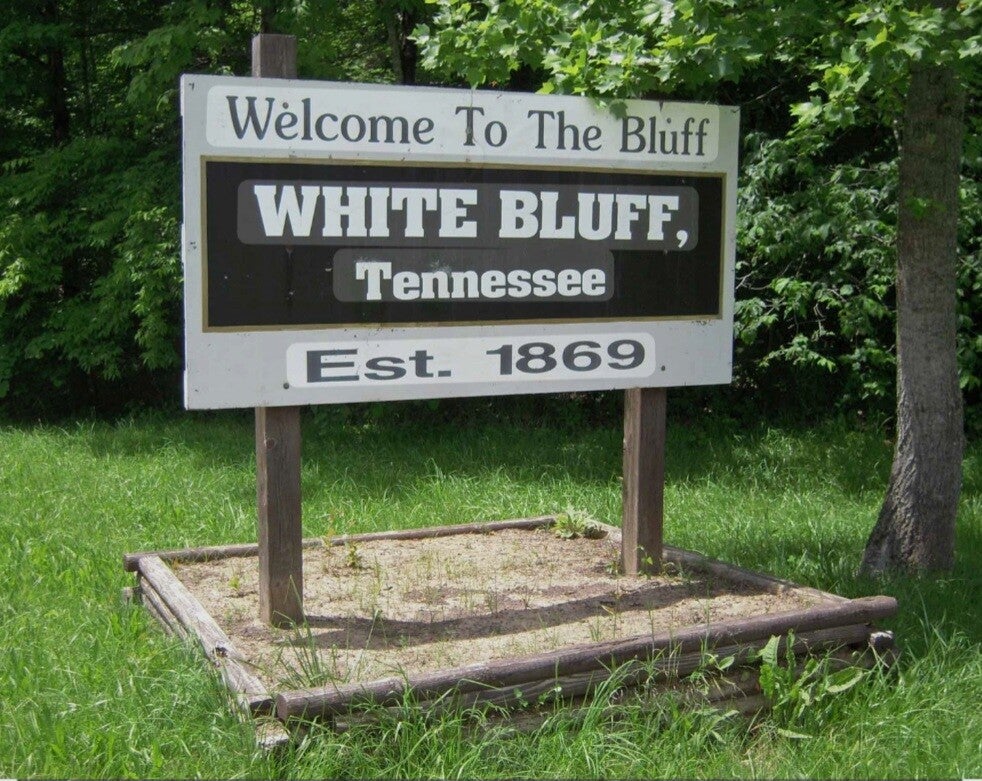
Voices from the front porch
Through the vivid voices of colorful characters—from poker-playing men to women who anchored the town's morals—this story preserves the rich oral traditions that defined rural Southern communities. Experience a world where mischief was forgiven, laughter echoed, and family bonds held even the wildest hearts close.
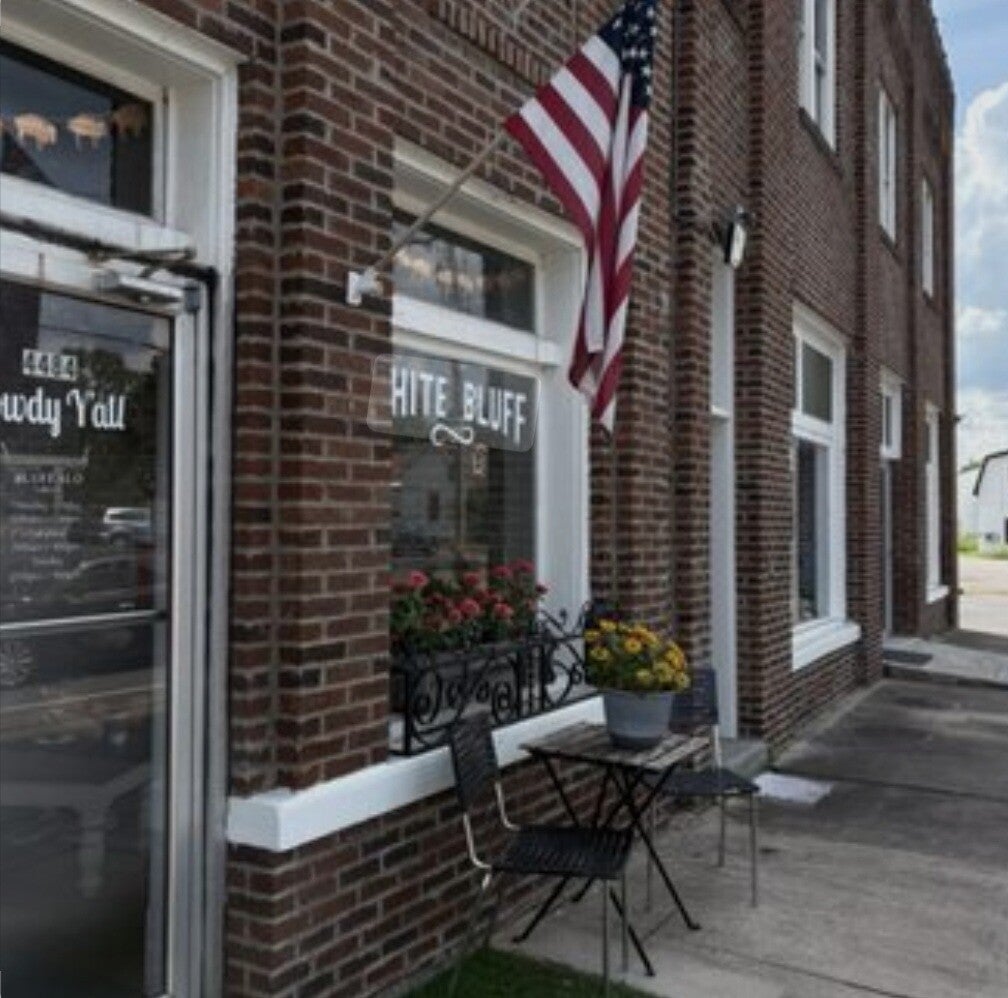
Where memories are truly made
At its heart, 'The Headless Horse of White Bluff' honors how memories are woven—not through perfection, but through shared moments, life's little mistakes, and the legends that grow grander with every telling. It reminds us that our heritage is alive, breathing in the stories passed down through generations, filled with laughter, faith, and fellowship.
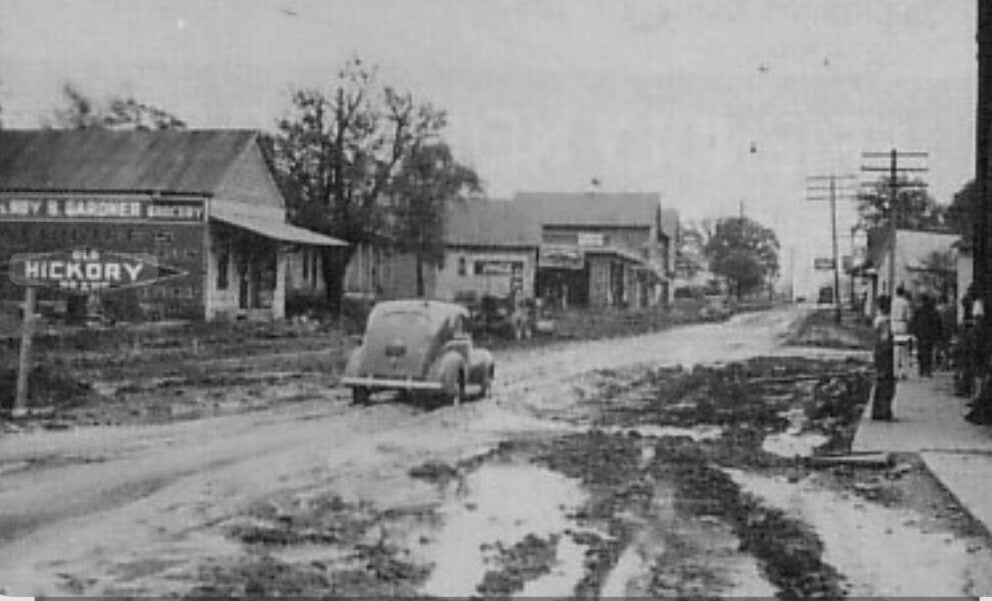
The soul of White Bluff, Tennessee
This unique narrative masterfully blends fiction with authentic truths, painting a captivating portrait of life in White Bluff, Tennessee, from the late 1950s through the 1980s. It’s more than just a story; it’s an essential telling of a community's soul, capturing its essence and untold spirit that simply has to be shared.
The Headless Horse of White Bluff
White Bluff, Tennessee, in the summer of 1959, was the kind of town that didn’t need much to get stirred up—just a deck of cards, a jar of corn liquor, and one good lie that stuck to the ribs like gravy on biscuits.
The Harpeth River curved lazy and brown along the edge of town, the hills rose green and stubborn, and Leatherwood Creek whispered secrets to anybody foolish enough to listen. White Bluff was a place where the sun rose slow, the coffee brewed strong, and the gossip traveled faster than the mailman. Folks measured time not by clocks but by church bells, card nights, and when Leroy’s still ran hot down Leatherwood Creek. The roads were still mostly dirt where they ran out of town, and the nights smelled of honeysuckle, tobacco smoke, and something stronger—usually coming from a still tucked deep in the woods.
Everybody knew everybody, and everybody knew something about everybody, even if they didn’t say it out loud. And in White Bluff, some things were better left unspoken—especially if they involved moonshine, poker, or Ms. Willowdean Hampton.
The Still Down Leatherwood Creek
Down Leatherwood Creek, past the old sycamores and beyond the bend where the water dipped quiet and dark, was Leroy’s still. It wasn’t marked, of course—no sign, no trail that wasn’t meant to disappear under briars and leaves—but folks who needed to find it always did.
Leroy had been running that still longer than most people could remember. Some swore he started before Prohibition ended and just never saw a reason to stop. He had hands like leather, eyes that always squinted like he was laughing at a joke no one else had heard yet, and a laugh that sounded like gravel rolling down a hill.
One afternoon, Eugene Willis stopped by the creek, wiping sweat from his brow.
“Leroy,” Eugene said, “you ever gonna get a legal job?”
Leroy took a sip from his jar and smacked his lips. “Corn don’t care what the law says, Eugene. Corn just wants to be whiskey.”
Eugene laughed. “That corn’s gonna send you to jail one day.”
“Jail can’t hold good liquor,” Leroy said. “It just runs right through.”
"And White Bluff wants that whiskey " Leroy shouted.
"Especially on Friday nights."
The Friday Night Card Game
Every Friday night, without fail, Eugene Willis hosted a poker game out at the old cabin down White Oak Flat Road. The cabin had been his granddaddy’s once, built out of rough-hewn logs, the kind of place that leaned a little but never quite fell. The roof sagged in places, the porch boards creaked like they were telling secrets, and the kerosene lamp inside cast more shadows than light.
But that cabin had heard more laughter, lies, deals, and dares than any church pew in town.
By sundown on Fridays, men started showing up in twos and threes—boots dusty, shirts damp with sweat, pockets heavy with loose change and folded bills. They brought decks of cards, Mason jars, cigars, and whatever news had traveled through town that week.
Police Chief Jimmy Hester was almost always there. Everybody knew it. Everybody also knew Jimmy liked a good card game and wasn’t afraid of strong drink. Some folks joked he enforced the law Monday through Thursday and ignored it Friday through Sunday morning.
“You can’t enforce what you enjoy,” he once said, grinning, as he took another sip.
Arthur Bryant showed up most Fridays, too, especially after closing shop at the Chrysler dealership in Dickson. Arthur was a steady man—solid, dependable, a church deacon who never missed communion when it was his turn to help serve. But Arthur also loved a good story, a good laugh, and a good game of cards.
And when Arthur showed up, it was almost guaranteed that his wife's uncle, Elijah Williams, wouldn’t be far behind.
Elijah Williams, Dares, and Bad Ideas
Elijah Williams was one of those men who never met a dare he didn’t want to shake hands with.
He was tall, broad-shouldered, and loud in the way men get when they’ve lived hard but laughed harder. He had a voice that carried across a field, a grin that flashed gold where teeth used to be, and a habit of leaning back in his chair like he was daring gravity itself to knock him over.
“Elijah ain’t scared of nothin’,” Eugene Willis liked to say. “Not storms, not lawmen, not God, and sure not ghosts.”
Elijah always nodded at that, even if he didn’t fully agree.
Because ghosts, if he was honest, made him uneasy.
And Ms. Willowdean Hampton made him downright nervous.
Ms. Willowdean Hampton and the Spirits
Willowdean Hampton ran the only beauty shop in White Bluff. The shop sat just off Main Street, a narrow building with big front windows, pink curtains, and the constant smell of hair spray, shampoo, and gossip.
Women came in for curls, trims, and perms—but they stayed for the stories.
Willowdean was tall, thin, and always dressed a little fancier than most folks in town. Her hair was perfectly set, her lipstick never smudged, and her eyes always looked like they knew something they weren’t telling.
Some folks said she dabbled in a little spooky witchcraft.
Others said she just liked to mess with people.
Still others whispered that she kept some of Leroy’s jars in her basement—and maybe even helped distribute them to certain clients who wanted more than just a haircut.
Willowdean never confirmed or denied any of it. She just smiled that slow, knowing smile and let folks talk.
But what truly set tongues wagging was her story about the stagecoach robbery.
The Stagecoach Robbery of 1856
According to Willowdean, back in 1856, a stagecoach traveling from Nashville to Charlotte had been robbed near the old road along Paint Rock Bluffs, along the Harpeth River. The coach had been carrying gold—real gold, heavy sacks of it—destined for the bank in Charlotte.
The robbers killed the driver, spooked the horses, and made off with the gold, but not before one of them was shot and left bleeding near the Indian mounds by the river. The rest of the gang, so the story went, buried the gold nearby, planning to come back for it later.
They never did.
Willowdean claimed the spirits told her where the gold was buried.
Not only that, she said the land was cursed—sacred Cherokee ground, haunted, and protected by restless spirits who would come after anyone who dared disturb it.
“The gold don’t want to be found,” she told anyone who asked. “And neither do the spirits guarding it.”
Once, she even bought an expensive metal detector and tried to search for it herself.
That’s when folks started asking, “If the spirits told her where it was, why’d she need a metal detector?”
Willowdean just smiled and said, “Spirits point the way. Machines do the digging.”
Most folks shrugged and figured it was all nonsense. But the stories kept people away from that stretch of land—and that suited Willowdean just fine.
Because rumor had it, that’s where she met Leroy in her daddy’s old farm truck to pick up her jars.
Spooky spirits made a good cover story.
Ms. Arline Bryant and Church Expectations
Ms. Arline Bryant didn’t have time for nonsense.
She was Arthur’s wife, Elijah’s niece by marriage, and the kind of woman who could straighten a man out with just one look. She kept a spotless home, raised her children in church, and believed strongly in showing up sober on Sunday mornings—especially if your husband was scheduled to help serve communion.
“God don’t want no whiskey breath at His table,” she used to say.
That Friday night, Arthur promised her he’d "come home early so he could sober up enough Saturday afternoon for church Sunday morning."
“Well,” he said, kissing her cheek, “best as I can.”
She didn’t like the way he said that.
The Night That Spilled Over
Friday night’s card game was especially lively. Leroy brought a fresh batch of his finest corn whiskey. Eugene Willis had a new deck of cards. Jimmy Hester had stories from the week—some of which were true, most of which weren’t. Arthur brought cash from a good week at the dealership. And Elijah brought his usual appetite for dares.
By midnight, the table was cluttered with empty jars, half-smoked cigars, and folded bills. Laughter filled the cabin. Arguments broke out over cards. Promises were made that nobody intended to keep.
That’s when Willowdean’s gold came up.
“Y’all ever think about that gold she talks about?” Eugene said, shuffling the deck. “That stagecoach gold up by Paint Rock Bluffs?”
“That’s just hair salon nonsense,” Jimmy Hester said, taking a drink. “Spirits ain’t buried no gold.”
“Spirits or not,” Leroy said, “if there was gold, it’d be gone by now.”
Arthur chuckled. “Willowdean’s been talking about that gold longer than I’ve been driving Chryslers.”
Elijah leaned back in his chair, grinning. “If there’s gold out there, I’ll find it.”
“Yeah?” Eugene said. “I dare you.”
The room went quiet.
Elijah loved a dare.
“I double-dog dare you,” Eugene added.
Arthur groaned. “Now you done it.”
Jimmy Hester laughed. “This ain’t gonna end well.”
Elijah slapped the table. “I ain’t scared of no ghosts.”
“Willowdean says the Cherokee curse comes after you,” Leroy said.
“Cherokee ain’t got no business with me,” Elijah said. “I ain’t stole nothin’ from them.”
“That’s what everyone says before the spirits show up,” Eugene said.
Arthur raised an eyebrow. “What exactly are you proposing, Eugene?”
“I propose,” Eugene said, grinning, “that Elijah goes out there tonight—or tomorrow night—and looks for that gold.”
Jimmy Hester leaned forward. “And if he finds it?”
“We play a card game with it,” Eugene said. “High-stakes poker.”
Elijah laughed. “I like the sound of that.”
Arthur shook his head. “Y’all are drunk.”
“That don’t make us wrong,” Eugene said.
Ms. Arline would have said it did.
Saturday Night, Round Two
Friday night bled into Saturday morning.
Arthur stumbled home around sunrise, smelling like corn whiskey and regret.
Ms. Arline was already up.
“You’re late,” she said.
“I know,” Arthur said. “But I ain’t drunk.”
She sniffed him. “You ain’t sober either.”
“I’ll be fine by church tomorrow,” he said.
“You better be,” she said. “It’s your turn to help with communion.”
Arthur nodded. “Yes, ma’am.”
He had every intention of keeping that promise.
But by Saturday evening, he found himself back at Eugene’s cabin.
The Dare Becomes a Plan
Saturday night’s gathering wasn’t planned, but nobody seemed surprised it happened.
Elijah showed up first.
Then Jimmy.
Then Leroy.
Then Arthur.
Then Eugene.
Somebody brought more whiskey. Somebody else brought more cards. And before anyone realized it, they were right back where they’d left off.
“Y’all still serious about this gold?” Arthur asked.
“I ain’t backed down,” Elijah said. “I’m ready to go.”
“You ain’t sober enough,” Arthur said.
“That’s when I’m bravest,” Elijah said.
Eugene smiled. “That’s when you’re stupidest.”
“Same thing,” Elijah said.
Arthur sighed. “Well, if you’re going, I’m going with you. With a shovel.”
“You’re gonna dig?” Elijah asked.
“Somebody has to,” Arthur said.
Jimmy Hester laughed. “I ought to arrest all of you.”
“You ain’t gonna,” Leroy said.
“No,” Jimmy admitted. “I ain’t.”
They all laughed.
That’s when Eugene had an idea. Not a good one. But a funny one.
The Prank Is Born
While Elijah and Arthur were arguing about whether the gold would be buried near the Indian mounds or closer to the riverbank, Eugene leaned over to Jimmy and Leroy.
“Y’all thinking what I’m thinking?” Eugene whispered.
Jimmy grinned. “I hope not.”
“I think I am,” Leroy said.
“What if,” Eugene said, “we scare Elijah half to death?”
Elijah didn’t hear them.
Arthur didn’t hear them.
They were too busy talking about ghosts and gold.
“We could make this real memorable,” Eugene said.
“How?” Jimmy asked.
“I got a Halloween mask at home,” Eugene said. “One of them old rubber ones.”
Leroy chuckled. “Elijah’s scared of ghosts.”
“I ain’t scared,” Elijah said, overhearing just enough to object.
“That’s what you said about snakes,” Jimmy said. “And we all remember how that went.”
Elijah frowned. “That snake was big.”
Eugene slapped his knee. “Alright then. Let’s do it.”
The Ride to the Bluffs
They saddled the horses just after dark.
The night was warm, thick with cicada song and the distant hum of frogs down by the creek. The moon hung low and yellow, casting long shadows across the dirt road as they headed out of town.
Elijah rode ahead, swaying in the saddle but upright. Arthur rode beside him, holding onto the shovel. Behind them, Jimmy, Leroy, and Eugene followed at a distance, careful not to be seen.
The old dirt path to the bluffs wound through trees and brush, past fields where cattle slept and owls watched silently from fence posts.
Elijah talked the whole way.
“I ain’t scared of ghosts,” he said again.
Arthur nodded. “You said that already.”
“If there’s gold out here, I’m gonna find it,” Elijah said.
Arthur sighed. “We’re not gonna find gold.”
“Well, we’re gonna look,” Elijah said.
They reached the top of the bluffs overlooking the Harpeth River.
The river glimmered faintly in the moonlight, slow and dark and quiet.
“This is it,” Elijah said. “This is where Willowdean said it was.”
Arthur dismounted and set the shovel against a tree. “You sure?”
“I’m sure enough,” Elijah said.
Arthur looked around. “I don’t see no Indian mounds.”
“They’re down there,” Elijah said, pointing vaguely. “Somewhere.”
Arthur rubbed his face. “We ain’t gonna find nothing.”
But Elijah was already trying to dismount.
And failing.
Arthur caught him before he fell.
“Maybe you ought to sit down,” Arthur said.
“I ain’t tired,” Elijah said.
“Yes, you are,” Arthur said.
Elijah slumped against a tree.
“Just resting my eyes,” he said.
And then he passed out.
Arthur stared at him.
“Well,” Arthur muttered, “this ain’t good.”
That’s when Eugene made his move.
The Ghost in the Woods
Eugene slipped off his horse and crept into the woods.
He pulled the Halloween mask out of his saddlebag and slipped it over his face.
It was an old rubber mask, yellowed with age, with hollow eyes, a long crooked nose, and a mouth frozen in a permanent, crooked grin.
In the moonlight, it looked like something out of a nightmare.
Eugene waited until Elijah stirred.
“Elijah,” Arthur said, shaking him gently. “Wake up.”
Elijah groaned. “What?”
“You said you wanted to look for gold,” Arthur said.
Elijah blinked. “I did.”
“Well, we’re here,” Arthur said.
Elijah squinted at the trees. “It’s dark.”
“That’s when ghosts come out,” Arthur said, trying not to laugh.
Elijah sat up straighter. “Ain’t no ghosts.”
That’s when Eugene jumped out of the woods. He let out a long, high-pitched scream. Elijah screamed louder. He tried to stand. He fell backward.
Arthur jumped. “Lord have mercy!” Arthur shouted.
Elijah scrambled, slipping and stumbling, eyes wide, heart racing.
“Ghost!” Elijah yelled. “Ghost!”
Eugene chased him in a wide circle, waving his arms and howling.
Elijah tripped and fell again.
Arthur bent over laughing so hard he could barely breathe.
Elijah finally collapsed, breathless, terrified, and drunk.
“That witch done sent her spirits!” Elijah yelled. “I knew it!”
Arthur tried to speak, but he was laughing too hard.
Eugene finally pulled the mask off.
“Lord, Elijah,” Eugene said, wiping tears from his eyes, “you oughta see your face.”
Elijah stared at him.
“You,” Elijah said slowly, “are gonna die.”
“Not tonight,” Eugene said.
Elijah passed out again.
Tied Backward on the Horse
Jimmy and Leroy rode up. “What happened?” Jimmy asked.
“He met the spirits,” Eugene said.
Leroy laughed. “Did he scream?”
“Like a banshee,” Eugene said.
Arthur wiped his eyes. “I ain’t laughed this hard in years.”
“What do we do with him?” Jimmy asked.
Arthur looked at Elijah.
Then at the horse.
Then back at Jimmy.
“I got an idea,” Arthur said.
“Oh Lord,” Jimmy said. “This ain’t gonna end well.”
They tied Elijah onto the horse. Backward. With his arms loosely secured so he wouldn’t fall off—but just enough that he couldn’t turn around. Then they slapped the horse’s rump and sent it trotting back toward town.
Elijah, still half-unconscious, groaned and muttered.
“Spirits,” he whispered. “Spirits.”
The rest of them followed at a distance, careful to stay out of sight.
“Y’all are terrible,” Jimmy said, laughing.
“I ain’t never gonna let him live this down,” Eugene said.
Arthur shook his head. “Ms. Arline is gonna kill me.”
Sunday Morning, Early Risers
Sunday morning came early. The sun rose soft and pink over White Bluff, birds sang, and church bells waited to ring. Ms. Arline Bryant was already up, as she always was on Sundays. So was Helen Carter, who lived a few houses down and liked to sit on her porch with her coffee and listen to the town wake up.
That’s when they heard it.
“Somebody help!”
Ms. Arline froze.
“Somebody help!”
Helen set down her cup.
“That don’t sound right,” Helen said.
“Somebody help! The witch done got me!”
Ms. Arline ran to the window.
Down Main Street came a horse.
On the horse was Elijah Williams.
Backward, drunk, yelling.
“The witch done got me! Cut my horse’s head clean off! I’m hanging on to the horse’s windpipe!”
Helen covered her mouth.
“Oh my Lord,” she whispered.
Elijah was hanging on for dear life.
One hand was on the horse’s tail.
The other was on the horse’s backside.
But in his drunken terror, he believed he was clinging to the horse’s windpipe and backside of a headless horse. The horse bucked and snorted, trying to shake him off.
Elijah screamed louder.
Ms. Arline threw open the door.
“Arthur!” she yelled.
Arthur stumbled out, still half asleep.
“What?” he asked.
“Look!” Ms. Arline said.
Arthur looked. Then he froze.
Then he laughed.
He laughed so hard he had to grab the porch railing.
“What’s he say?” Arthur gasped. “He’s hanging on to the horse’s windpipe?”
Elijah rode past them, yelling, crying, praying, and cussing all at once.
“The witch got me! The witch got me!”
Ms. Arline’s face turned red.
“Arthur Bryant,” she said, “I know this was you.”
Arthur tried to speak.
He couldn’t. He was laughing too hard.
Ms. Arline marched into the yard.
“Somebody get him off that horse!” she shouted. “Leroy! Jimmy! Eugene! I know y’all are behind this!”
Jimmy, Leroy, and Eugene came out from behind a nearby building, trying—and failing—to look innocent.
“Untie him!” Ms. Arline said. “Take him home to his wife, Sarah Williams, and y’all better be done in time for church!”
Elijah finally slid off the horse and collapsed into the dirt.
“Spirits,” he moaned. “Spirits everywhere.”
Leroy knelt beside him. “You’re alright, Elijah.”
“Am I alive?” Elijah asked.
“Unfortunately,” Eugene said.
Elijah opened his eyes and saw them.
“You,” he said, pointing weakly. “You did this.”
“We might’ve helped,” Jimmy said.
Elijah groaned. “I’m never playing cards with y’all again.”
“Sure you are,” Arthur said. “Next Friday.”
Elijah rolled over. “I hate all of you.”
The Church Bell Rings
Ms. Arline turned to Arthur.
“You promised you’d be sober enough for church,” she said.
Arthur wiped his eyes. “I am sober enough.”
She sniffed him. “Barely.”
“I can still serve communion,” Arthur said.
“You better,” she said. “God saw all of this.”
“God’s probably laughing,” Eugene said.
Ms. Arline shot him a look. “Don’t you start.”
They helped Elijah onto his feet and walked him home.
Sarah Williams stood on her porch, arms crossed.
“What happened?” she asked.
“Elijah met a ghost,” Jimmy said.
Sarah rolled her eyes. “Elijah met whiskey.”
Elijah hung his head. “She got me.”
“No she didn’t,” Sarah said. “You got yourself.”
She dragged him inside.
The Church Scene (and the Communion Spill)
By the time the church bell rang over at the Methodist Episcopal Church, Arthur had washed his face, changed his shirt, and done his best to look holy.
Ms. Arline sat in the front pew, arms folded, eyes sharp. Arthur stood beside the minister, holding the communion tray, trying very hard not to sway.
The sanctuary was full—wooden pews creaking, fans fluttering, hymns rising slow and steady, Bernice playing the organ soft and peaceful like.
The minister whispered, “You alright, Arthur?” Arthur whispered back, “Yes, sir. I’m fine.” Ms. Arline whispered from the pew, “You better be.” Arthur nodded.
Then it happened.
As he stepped forward to pass the tray, his foot caught on the edge of the rug. The tray tilted.
The wine sloshed. And one cup tipped. Red wine spilled down the white cloth.
The sanctuary gasped.
Arthur froze.
“Oh Lord,” he whispered.
The minister leaned over. “Arthur…”
Ms. Arline closed her eyes.
“Not again,” she whispered.
Arthur tried to dab the cloth with his handkerchief. It only spread.
Jimmy Hester, sitting near the back, leaned over to Eugene and whispered, “Looks like the blood of Christ done met the blood of corn.”
Eugene stifled a laugh. Ms. Arline shot them a look that could have split stone. Arthur finished serving communion, cheeks burning, hands shaking.
After church, Ms. Arline met him at the door. “Arthur Bryant,” she said, “you remember this moment every time your name comes up for communion.”
Arthur nodded. “Yes, ma’am.”
“And you will,” she said, “never forget.”
Arthur sighed. “No, ma’am.”
From then on, every time Arthur’s turn came to assist the minister, someone would whisper, “Better not spill the wine.”
Arthur would sigh and say, “I ain’t never gonna live that down.”
And Ms. Arline would say, “No, you ain’t.”
Willowdean’s Reaction
By noon, the whole town knew.
By Monday morning, the story had reached Willowdean Hampton’s beauty shop.
She leaned over her counter, listening as one of her clients told the tale between snips of scissors.
“So he come down Main Street backward on a horse, yelling about a witch and a headless horse,” the woman said.
Willowdean smiled.
“Well,” she said, “the spirits do what they want.”
“You had something to do with it?” the woman asked.
Willowdean’s eyes twinkled. “Spirits don’t need my help.”
But later that afternoon, Leroy stopped by the shop.
He didn’t need a haircut.
He just needed to check something.
Willowdean met him in the back.
“You hear about Elijah?” Leroy asked.
“Of course,” Willowdean said. “The spirits had their way with him.”
Leroy laughed. “You sure about that?”
Willowdean smiled. “Spirits take many forms.”
“And sometimes wear Halloween masks,” Leroy said.
Willowdean raised an eyebrow. “Don’t go spoiling a good story.”
Elijah’s New Name
From that day on, Elijah Williams was known by a new name.
“The Headless Horse.”
Every time he walked into a room, someone would neigh.
Every time he sat down, someone would ask if he was hanging onto the windpipe.
Every time he passed Willowdean’s shop, someone would say, “Watch out for the spirits.”
Elijah took it as well as he could.
Which is to say, he grumbled, threatened, laughed, and eventually accepted it.
“Y’all are gonna regret this,” he said one night at the card table.
“We already enjoyed it,” Eugene said.
Arthur raised his glass. “To Elijah.”
“To the Headless Horse,” Jimmy said.
Elijah sighed. “I hate all of you.”
They clinked glasses anyway.
The Gold That Was Never Found
No one ever found Willowdean’s gold. Some folks still talked about it. Some folks still wondered. But most folks figured that if the gold existed, it had been spent long before any of them were born.
And if it didn’t exist, well—it had already served its purpose. It gave people something to talk about. Something to dare each other over. Something to laugh about.
And in White Bluff, laughter was worth more than gold.
Epilogue: The Legacy of a Prank
Years later, children would sit on porches and listen to their grandparents tell the story.
“Tell us about the Headless Horse,” they’d say.
And the old folks would smile.
They’d talk about Leatherwood Creek, Eugene’s cabin, Leroy’s still, Jimmy Hester’s laugh, Willowdean’s spirits, Arthur’s shovel, Ms. Arline’s righteous anger, and Elijah’s unforgettable ride through Main Street.
They’d laugh. They’d shake their heads.
They’d say, “That was White Bluff.”
And somewhere, in a memory soaked with moonshine and moonlight, Elijah Williams would still be riding backward on that horse, hanging on for dear life, yelling about witches and windpipes, and giving the town a story it would never forget.
~ Shane Bryant
Create Your Own Website With Webador